Uncategorized

FoNIBIB Resources

FoNIBIB develops and curates resources to help the broader bioengineering and biomedical imaging community engage with NIBIB, while raising public awareness of the impact of NIBIB funding on healthcare innovation and scientific discovery.

Directory: Find Your NIBIB Program Director (Last Updated: October 7, 2026)

Identifying the appropriate NIH Program Director at a specific Institute or Center can be an important first step for researchers seeking guidance on potential grant applications and understanding how their work aligns with NIH scientific priorities.

To help the bioengineering and biomedical imaging community navigate NIBIB’s program areas and identify program directors and staff whose expertise most closely aligns with their research, FoNIBIB has compiled this directory using publicly available information. The directory organizes NIBIB program staff by their division and areas of scientific expertise and provides available contact information to help researchers connect directly with the appropriate NIBIB staff. FoNIBIB will continually review and update this NIBIB-specific directory to provide the research community with current information.

Extramural Science Program

The National Institute of Biomedical Imaging and Bioengineering (NIBIB) funds research in a variety of scientific areas in biomedical imaging, bioengineering, and informatics, and training for researchers throughout the career span.

Guoying Liu, Ph.D.
Acting Associate Director for Extramural Science Programs
301-594-5220
liug@mail.nih.gov


Biomedical Imaging (Division of Applied Science & Technology)

The Division of Applied Science & Technology supports the development of biomedical imaging technologies to transform our understanding of biological and disease processes for improving diagnostics, image-guided therapies, and human health.

Randy King, Ph.D.
Acting Division Director
Program Area(s): Photoacoustic and Optoacoustic Technologies; Ultrasound: Diagnostic and Interventional
301-451-0707
randy.king@nih.gov

Afrouz Azari Anderson, Ph.D.
Program Director
Program Area(s): Optical Imaging and Spectroscopy
301-496-4558
afrouz.anderson@nih.gov

Tatjana Atanasijevic, Ph.D.
Program Director
Program Area(s): Molecular Probes and Imaging Agents; Nuclear Medicine
301-451-6873
atanasijevict@mail.nih.gov

Robert L. Barry, Ph.D.
Program Director
Program Area(s): Magnetic Resonance Imaging (MRI)
301-827-5814
robert.barry@nih.gov

Winona Nice, Ph.D.
Program Director
Program Area(s): Image-Guided Interventions
240-401-2510
winona.nice@nih.gov

Martin Tornai, Ph.D.
Program Director
Program Area(s): Nuclear Medicine; Positron Emission Tomography (PET) and Single‑Photon Emission Computed Tomography (SPECT); X-ray and Computed Tomography (CT)
240-328-7193
martin.tornai@nih.gov

Shumin Wang, Ph.D.
Program Director
Program Area(s): Bio-Electromagnetic Technologies; Magnetic Resonance
Imaging (MRI)
301-594-9001
shumin.wang@nih.gov


Informatics (Division of Health Informatics Technologies)

The Division of Health Informatics Technologies supports the evaluation of biomedical information toward patient-centered applications of clinical decision-making, in-home health monitoring, next-generation imaging, and mobile health.

Behrouz Shabestari, Ph.D.
Division Director
Director, National Centers for Biomedical Imaging and Bioengineering
Program Area(s): Artificial Intelligence, Machine Learning, and Deep Learning; Image Processing, Visual Perception and Display; Optical Imaging and Spectroscopy
301-451-6771
shabestb@mail.nih.gov

Tiffani Bailey Lash, Ph.D.
Program Director
Program Area(s): Digital Health – Mobile Health and Telehealth; Point of Care Technologies – Diagnostics
301-451-4778
baileyti@mail.nih.gov

Qi Duan, Ph.D.
Program Director
Program Area(s): Biomedical Informatics; Image Processing, Visual Perception and Display
301-451-4780
qi.duan@nih.gov

Kristin Hedgepath Gilchrist, Ph.D.
Program Director
Program Area(s): Point of Care Technologies – Diagnostics
301-480-5724
kristin.gilchrist@nih.gov

Shawn Mulvaney, Ph.D.
Health Science Administrator
Program Area(s): Bioanalytical Sensors; Point of Care Technologies – Diagnostics
240-506-4724
shawn.mulvaney@nih.gov]


Bioengineering (Division of Discovery Science and Technology)

The Division of Discovery Science and Technology supports the development of biomedical technologies that interface with, monitor, and regulate functions of human physiology.

Luisa Russell, Ph.D.
Acting Division Director
301-496-5654
luisa.russell@nih.gov

Moria Fisher Bittmann, Ph.D.
Program Director
Program Area(s): Bionics; Robotics
301-496-7699
moria.bittmann@nih.gov

Jermont Chen, Ph.D.
Program Director
Program Area(s): Nanomaterials, Microphysiological Systems
301-451-4778
jermont.chen@nih.gov

Nichole Daringer, Ph.D.
Program Director
Program Area(s): Biomolecular Technologies
301-451-4774
nichole.daringer@nih.gov

Jessica Falcone, Ph.D.
Program Director
Program Area(s): Medical Devices
301-451-4778
jessica.falcone@nih.gov

Tuba Fehr, Ph.D.
Program Director
Program Area (s): Cellular and Multicellular Technologies; Living Materials
tuba.fehr@nih.gov

Jonathan Kulwatno, Ph.D.
Program Director
Program Area(s): Manufacturing and Biomanufacturing Tools; Physiomimetic Materials
301-827-6313
jonathan.kulwatno@nih.gov

Grace C.Y. Peng, Ph.D.
Program Director
Program Area(s): Medical Simulators, Modeling
301-496-9178
penggr@mail.nih.gov

Manana Sukhareva, Ph.D.
Program Director
Program Area(s): Molecular Materials, Screening and High-throughput
301-451-3397
Manana.Sukhareva@nih.gov


Workforce & Training (Division of Interdisciplinary Training)

The Division of Interdisciplinary Training aims to develop a competent workforce that can address bioengineering challenges of the future, supporting research training starting with undergraduate education through the early career stage.

Zeynep Erim, Ph.D.
Division Director
301-451-4797
erimz@mail.nih.gov

Tina Gatlin, Ph.D.
Program Director
gatlincl@nih.gov

Dave Gutekunst, Ph.D.
Program Director
240-789-0004
dave.gutekunst@nih.gov


RADx® Tech and Small Business (Office of Program Evaluation and Strategic Partnerships)

The Office of Program Evaluation and Strategic Partnerships supports innovative technologies through various stages of commercial research and development.

Todd D Merchak
Director, Office of Program Evaluation and Strategic Partnerships
301-496-8592
merchakt@mail.nih.gov

Kari Ashmont, Ph.D.
Translational Team Lead
301-451-4772
kari.ashmont@nih.gov

Stacie Gutowski, Ph.D.
Program Director
301-480-4660
stacie.gutowski@nih.gov

Shawn Mulvaney, Ph.D.
Program Director
240-506-4724
shawn.mulvaney@nih.gov

Michael Wolfson, Ph.D.
Program Director
301-451-6987
michael.wolfson@nih.gov
Read more

Congressional Activities

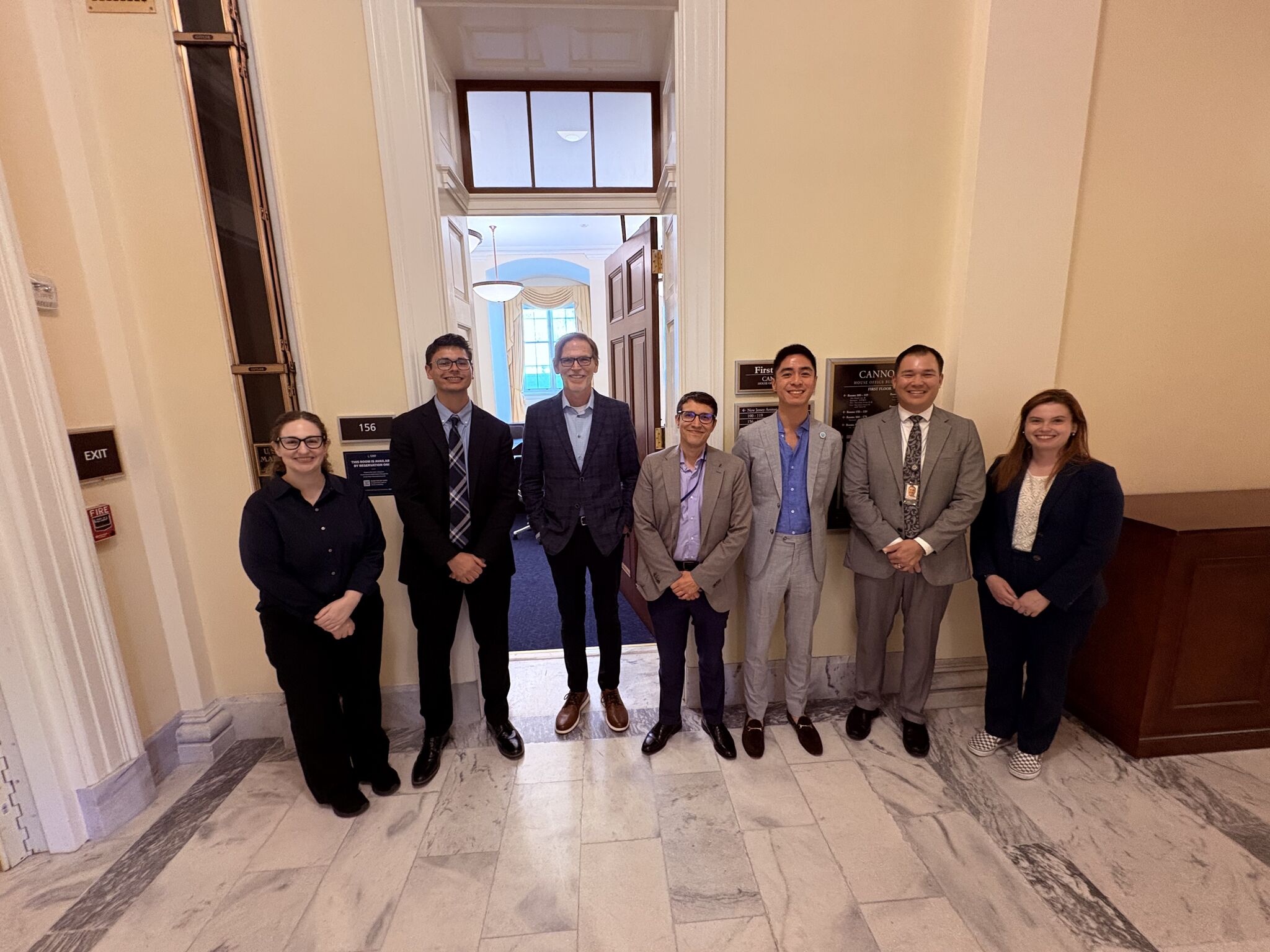
FoNIBIB hosts an annual campus visit to NIBIB for congressional staff to engage in medical technology (MedTech) demonstrations, intramural laboratory tours, and grantee presentations that showcase the breadth of research supported by NIBIB. See the 2023 and 2024 visits organized by AIMBE and the 2025 and 2026 visits organized by FoNIBIB.

FoNIBIB also convenes NIBIB grantees to serve as scientific experts, presenting to Members of Congress and congressional staff on the contributions of bioengineering and biomedical imaging to healthcare innovation and the essential role of NIBIB funding in advancing this work.

Some examples of past congressional briefing topics include:

  • Non-Animal Models (NAMs) in Biomedical Research
  • Per- and Polyfluorinated Substances (PFAS) in Medical Devices
  • AI to Improve Health Care
  • Using Nanotechnology to Target Disease
  • Innovative Medical Technologies Using Tissue Engineering and 3D Printing

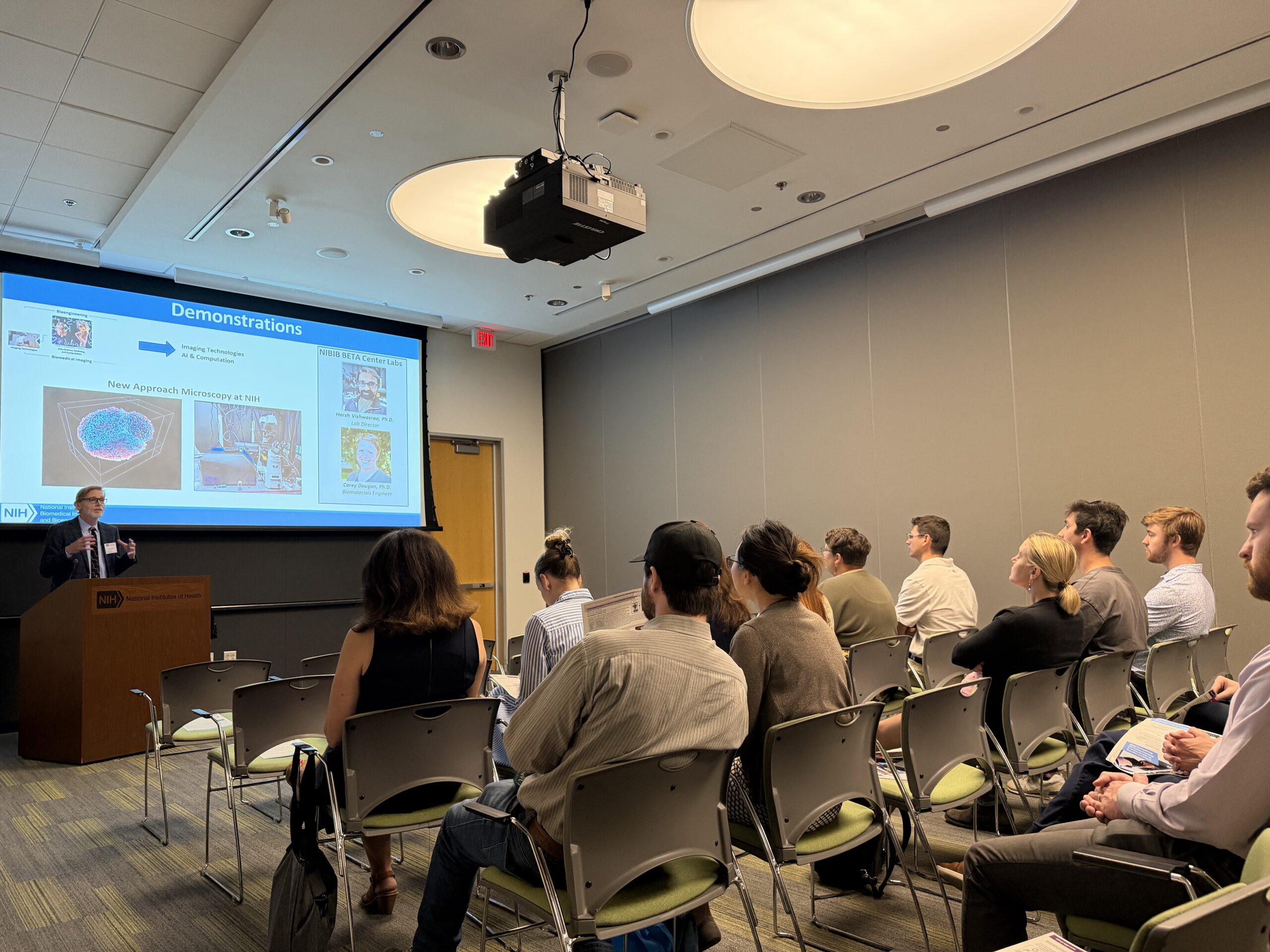
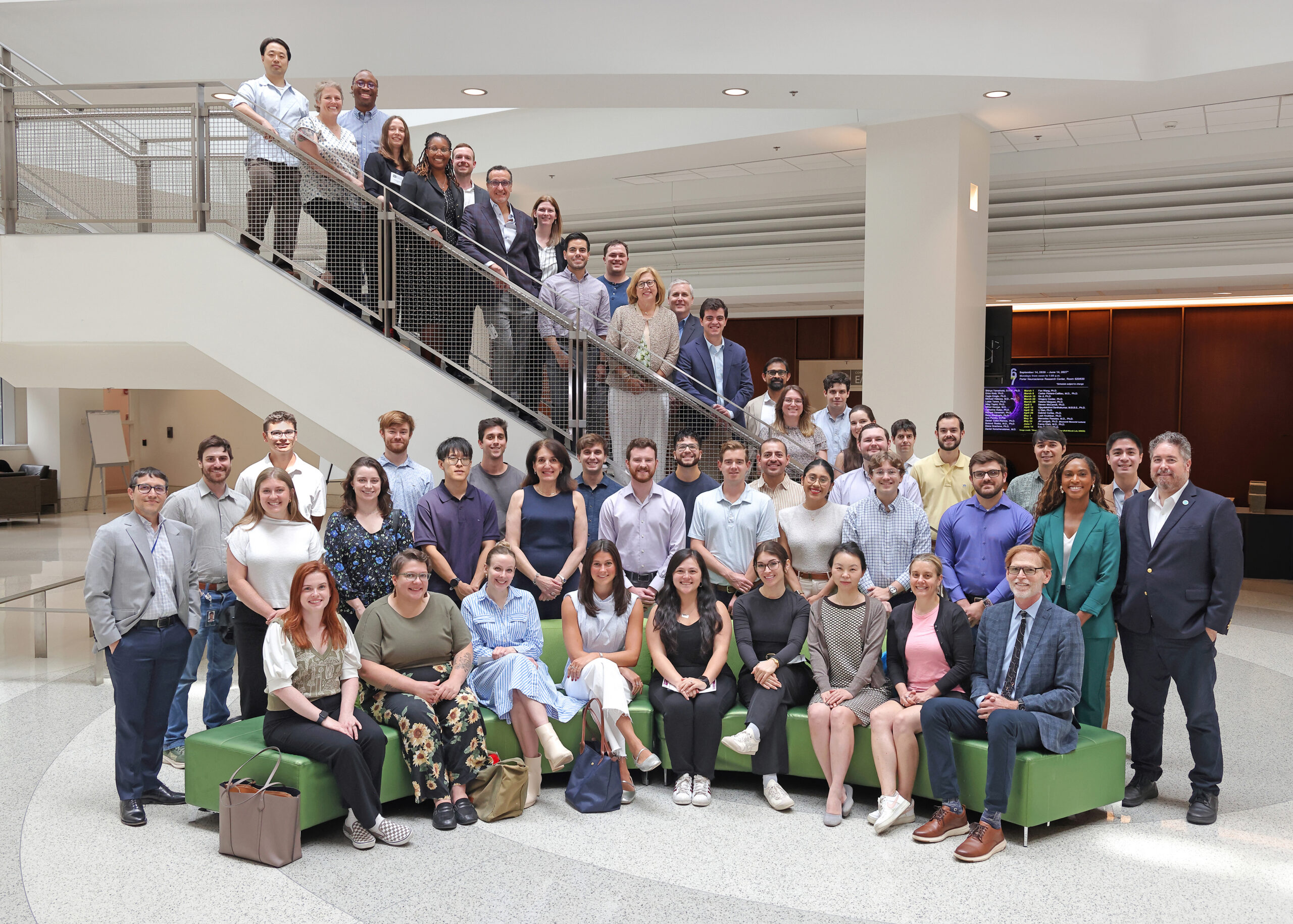
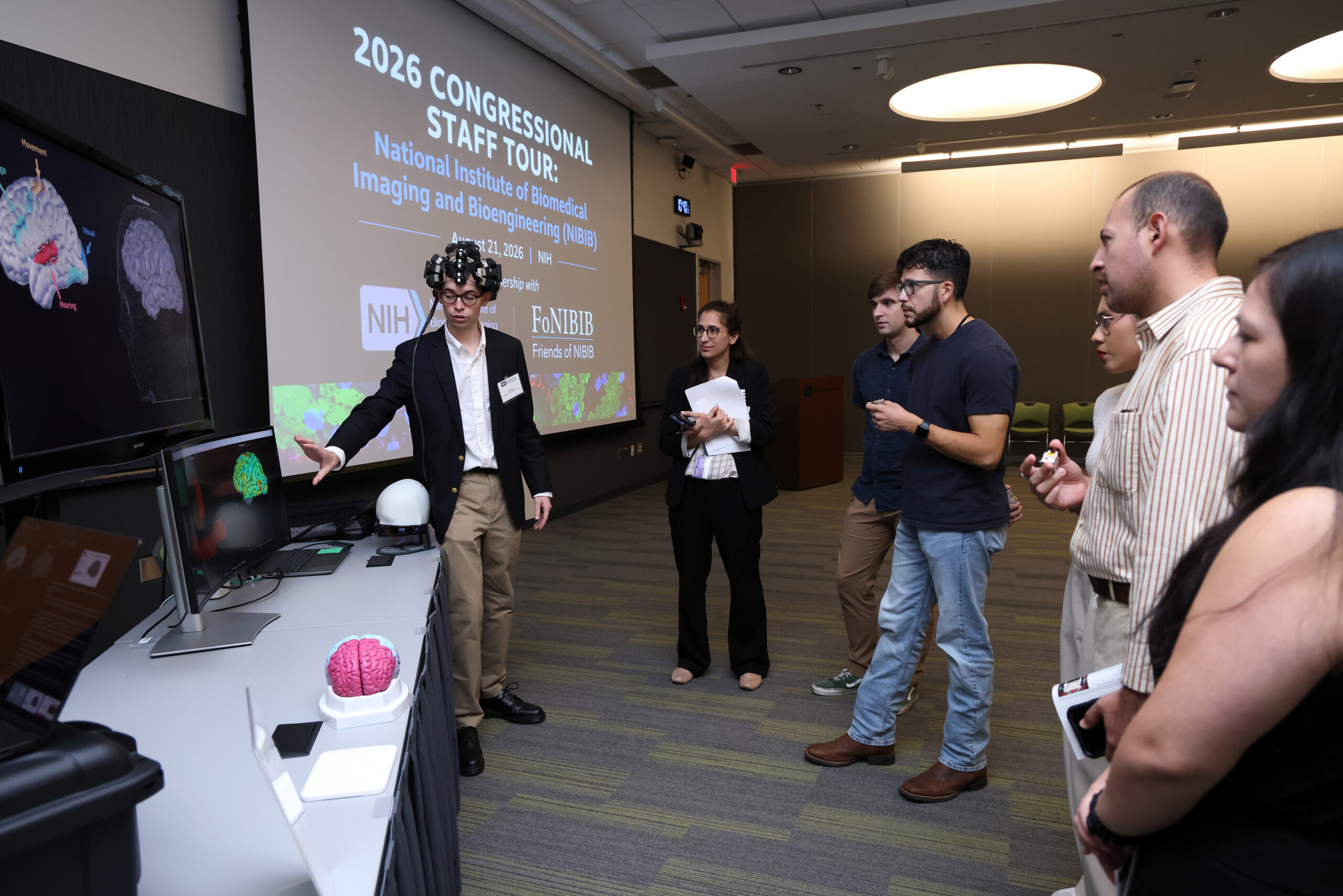
2026 NIBIB/FoNIBIB Congressional Tour

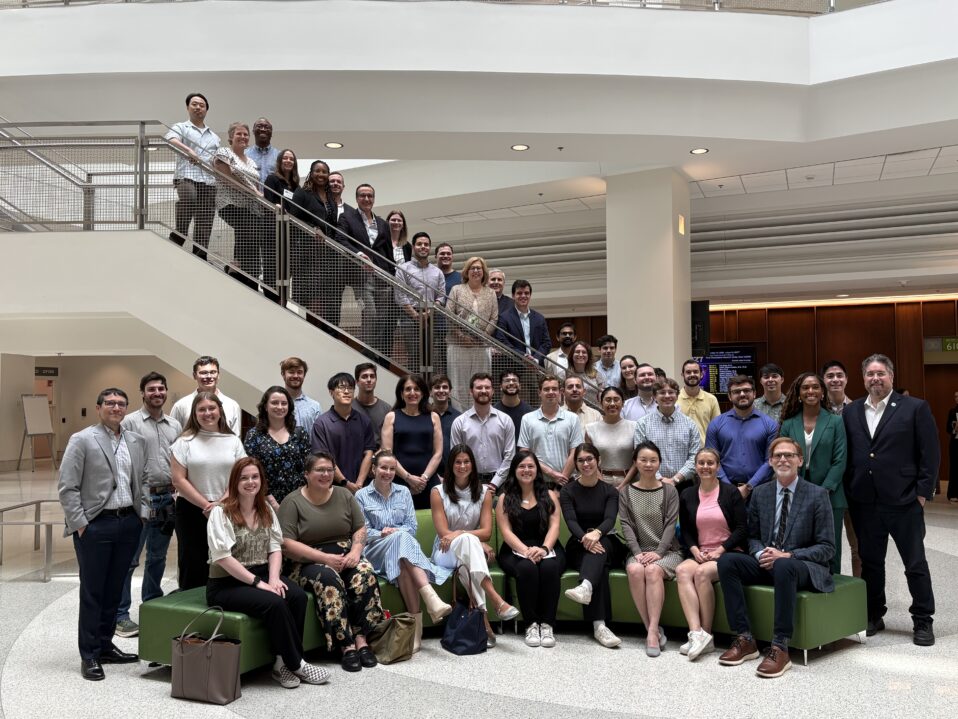
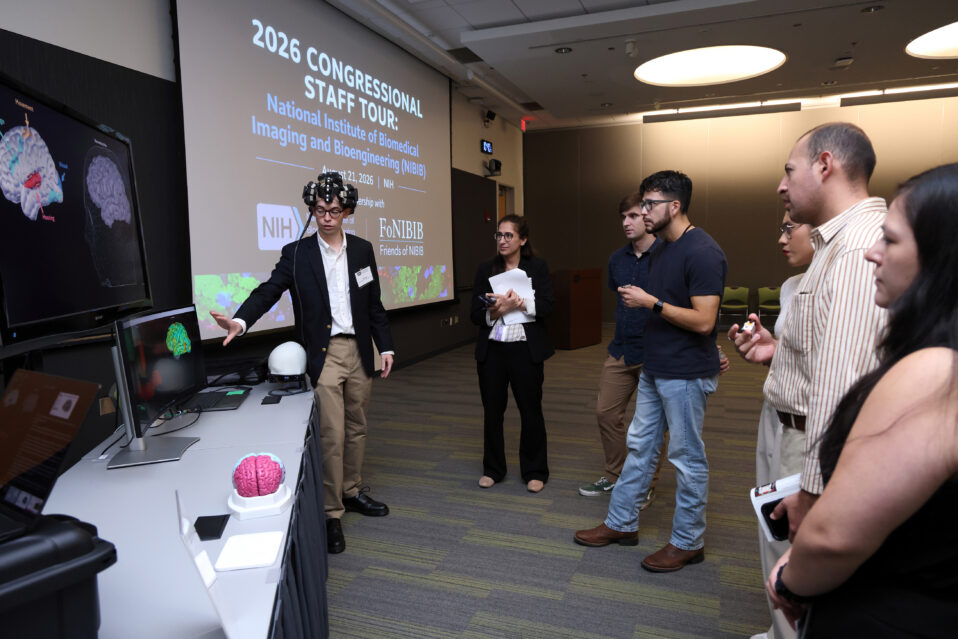
On August 21, 2026, FoNIBIB hosted a Congressional event on the NIH campus. Nearly 40 congressional staffers witnessed technology demonstrations and visited NIBIB’s Research Program BETA Center and AIM Resource. These demonstrations showcased the breadth of research supported by NIBIB. Demonstrations were given by extramural NIBIB grantees from Columbia University, Vanderbilt University, Rice University, and Washington University in St. Louis.

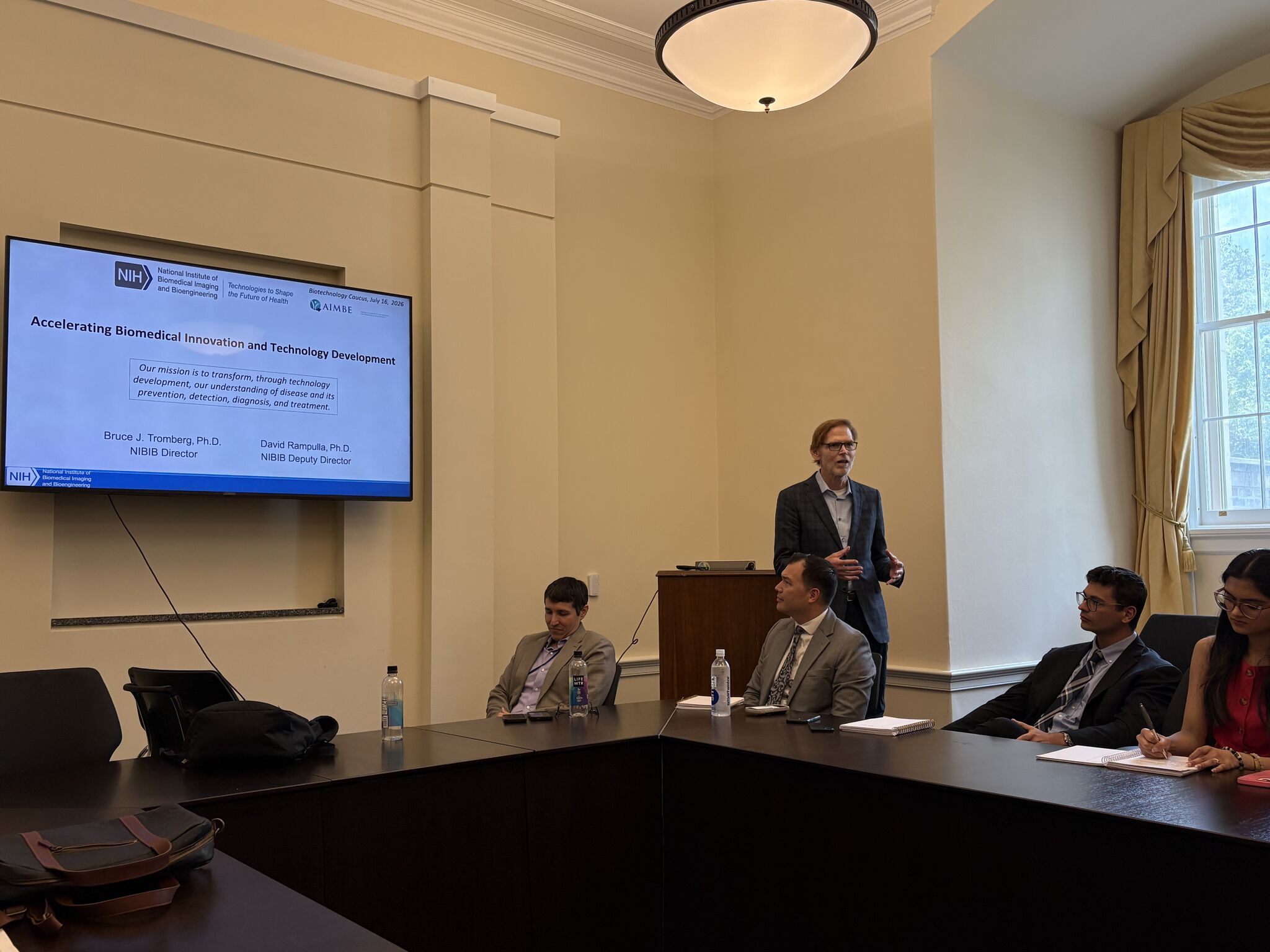
2026 FoNIBIB Congressional Roundtable: House BIOTech Caucus

On July 16, 2026, FoNIBIB organized a bipartisan roundtable discussion with congressional staffers from the House BIOTech Caucus. FoNIBIB hosted Dr. Bruce Tromberg (NIBIB Director) and Dr. David Rampulla (NIBIB Deputy Director), to share insights into the Institute’s role in advancing biotechnology innovation. The event provided congressional staff with the opportunity to engage directly with Drs. Tromberg and Rampulla on NIBIB’s scientific priorities, strategic investments, and initiatives that are accelerating the development, translation, and commercialization of innovative medical technologies. These activities are improving patient care while strengthening U.S. competitiveness and global leadership in biotechnology.

2025 FoNIBIB Congressional Briefing – Non-Animal Models in Biomedical Research: Current & Future Opportunities

On September 12, 2025, FoNIBIB organized a Congressional Lunch Briefing on “Non-Animal Models in Biomedical Research: Current & Future Opportunities” in collaboration with the House Longevity Science Caucus. Over forty attendees, including legislative aides to Members of Congress and government relations staff from various science stakeholder groups, attended the event. Dr. Lola Eniola-Adefeso (AIMBE President) provided opening remarks followed by a presentation by Dr. Bruce Tromberg (NIBIB Director), on the Institute’s strategic investments to support New Approach Methodologies (NAMs), opportunities for their growth, and key considerations for validating and commercializing these technologies. Drs. Wilbur Lam (Emory University and The Georgia Institute of Technology) and Jenny Munson (Fralin Biomedical Research Institute and Virginia Tech) spoke on biological and computational technological approaches to NAMs. We emphasized the crucial role of the medical and biological engineering community in leading these efforts to enable their full potential as complementary approaches and potential replacements to traditional animal models. Click here to view our educational one-pager on NAMs.

2025 NIBIB/FoNIBIB Congressional Tour

On July 18, 2025, FoNIBIB hosted a Congressional event on the NIH campus. Nearly 50 congressional staffers witnessed technology demonstrations and visited NIBIB’s Research Program BETA Center and AIM Resource. These demonstrations showcased the breadth of research supported by NIBIB. Demonstrations were given by extramural NIBIB grantees from Boston University, the University of Chicago, Carnegie Mellon University, and the University of California, Irvine.

Click here to read more about the event.

2024 NIBIB/AIMBE Congressional Tour

Fifty congressional staff visited NIH on August 7, 2024, to see technology demonstrations and visit laboratories presented by NIBIB intramural researchers and grantees. The demonstrations showcased the breadth of research supported by the institute. Demonstrations were given by NIBIB’s Intramural Research Program and included the Section on Immunoengineering, Section on Mechanobiology and the MATRICES lab, and two NIBIB grantee presentations from Duke University, Harvard Medical School and Brigham and Women’s Hospital and Xander Medical. The congressional staff visited at the invitation of the American Institute for Medical and Biological Engineering (AIMBE). Photographs by Chia-Chi (Charlie) Chang…. Continue reading.

2023 NIBIB/AIMBE Congressional Tour

Congressional staff visited NIBIB on June 27, 2023 to see technology demonstrations presented by NIBIB grantees. The demonstrations showcase the breadth of research supported by NIBIB. Demonstrations were given by Johns Hopkins University, Georgia Institute of Technology/Emory University, North Carolina State University/University of North Carolina at Chapel Hill, the U.S. Food and Drug Administration (FDA), and NIBIB’s Intramural Research Program MATRICES lab and BETA Center. The congressional staff are visiting at the invitation of the American Institute for Medical and Biological Engineering (AIMBE).

This tour was at the invitation of AIMBE. AIMBE is a non-profit, honorific society that brings together academia, industry, government, and scientific societies to advance medical and biological engineering. AIMBE’s mission is to recognize excellence, advance the public understanding, and accelerate medical and biological innovation for the benefit of society…. Continue reading.

Read more

Public Outreach

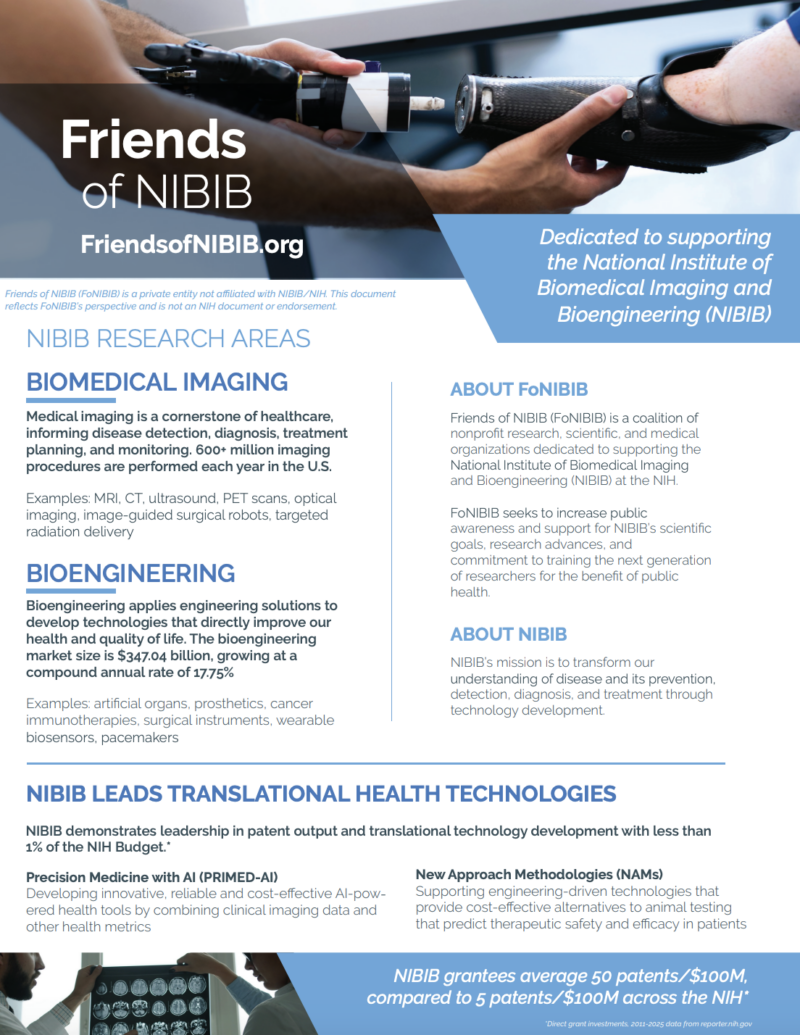
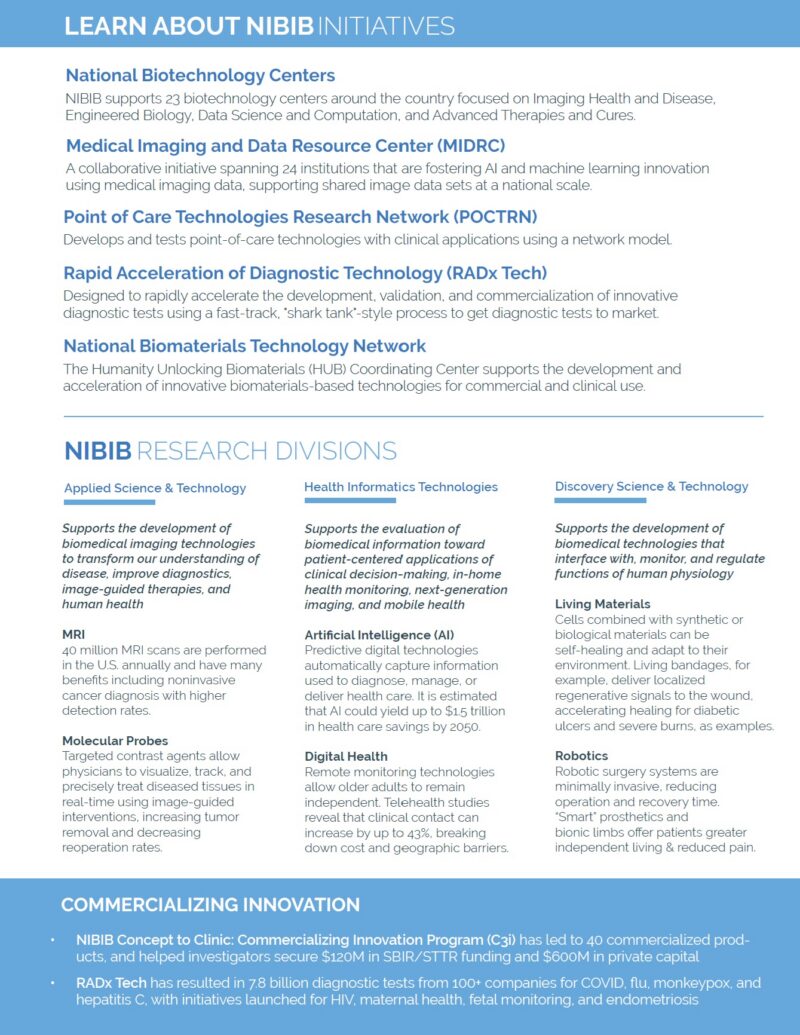
FoNIBIB engages the broader bioengineering and biomedical imaging community to raise awareness of the impact of NIBIB-funded research and strengthen support for the Institute. These efforts include letter-writing campaigns to Members of Congress and their staff, social media features highlighting the impact of NIBIB-funded work, amplification of NIBIB communications across the community, and our FoNIBIB newsletter, which provides updates, resources, and opportunities to engage.

FoNIBIB 1-Pager_Front
FoNIBIB One-Pager_Back

2024 AIMBE Submits Feedback on Proposed NIH Reorganization

In our ongoing efforts to ensure that the voices of our community are heard, AIMBE has submitted a letter to Chairwoman McMorris Rodgers, providing critical feedback on the Energy and Commerce Committee’s Framework for Reforming the NIH. While we commend the initiative to enhance efficiency and foster innovation within NIH, we have expressed significant concerns about the proposed consolidation of NIBIB with other entities, as well as the substantial budget reduction. AIMBE emphasized that such changes could undermine the vital role NIBIB plays in advancing biomedical engineering and jeopardize future innovations in healthcare. We remain committed to advocating for policies that support the ongoing advancement of medical and biological engineering and ensuring that the needs of our field are represented in this important conversation. See below to read AIMBE’s full letter.

Re: Reforming the National Institutes of Health: Framework for Discussion

Read more

NIBIB Leadership Meetings

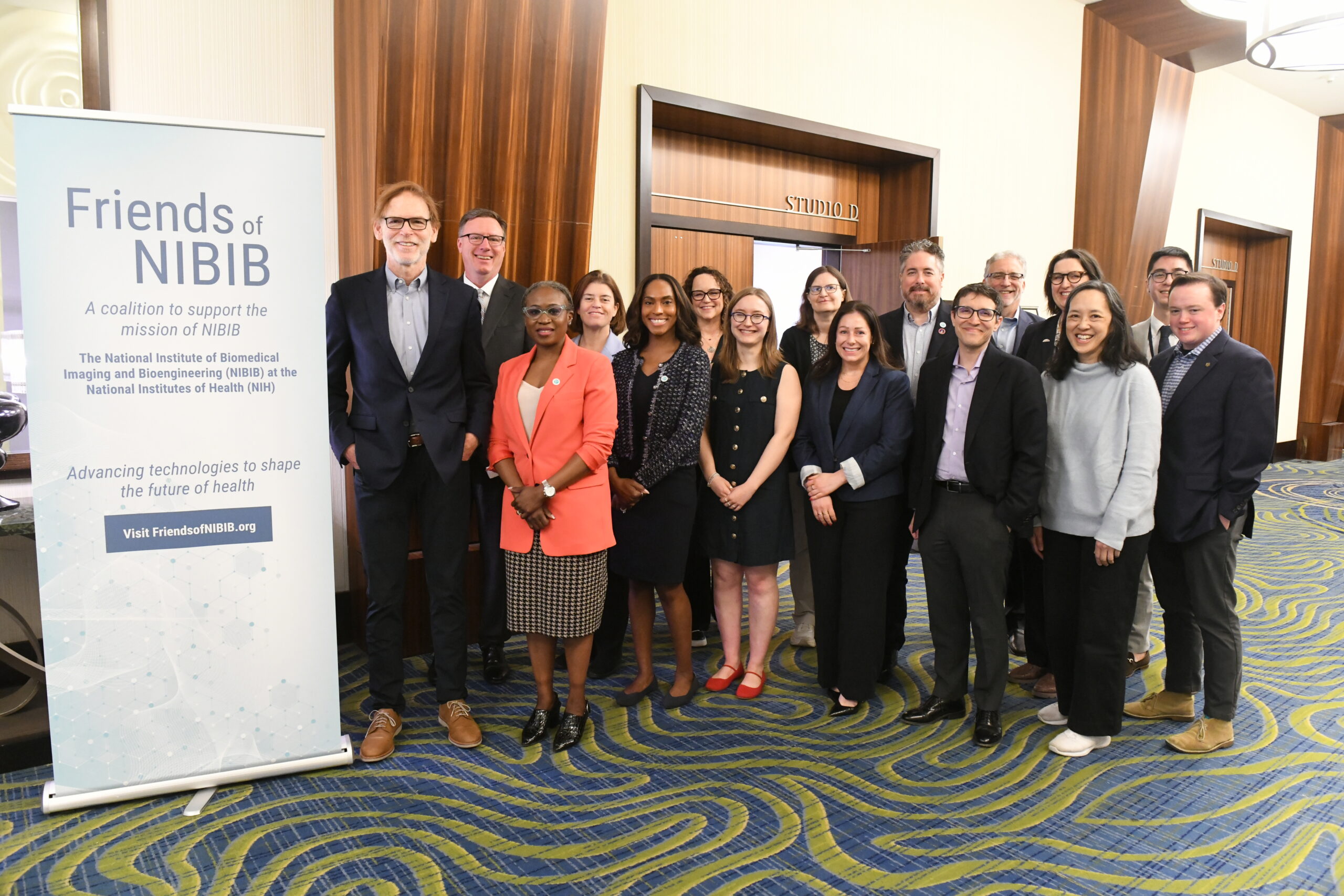
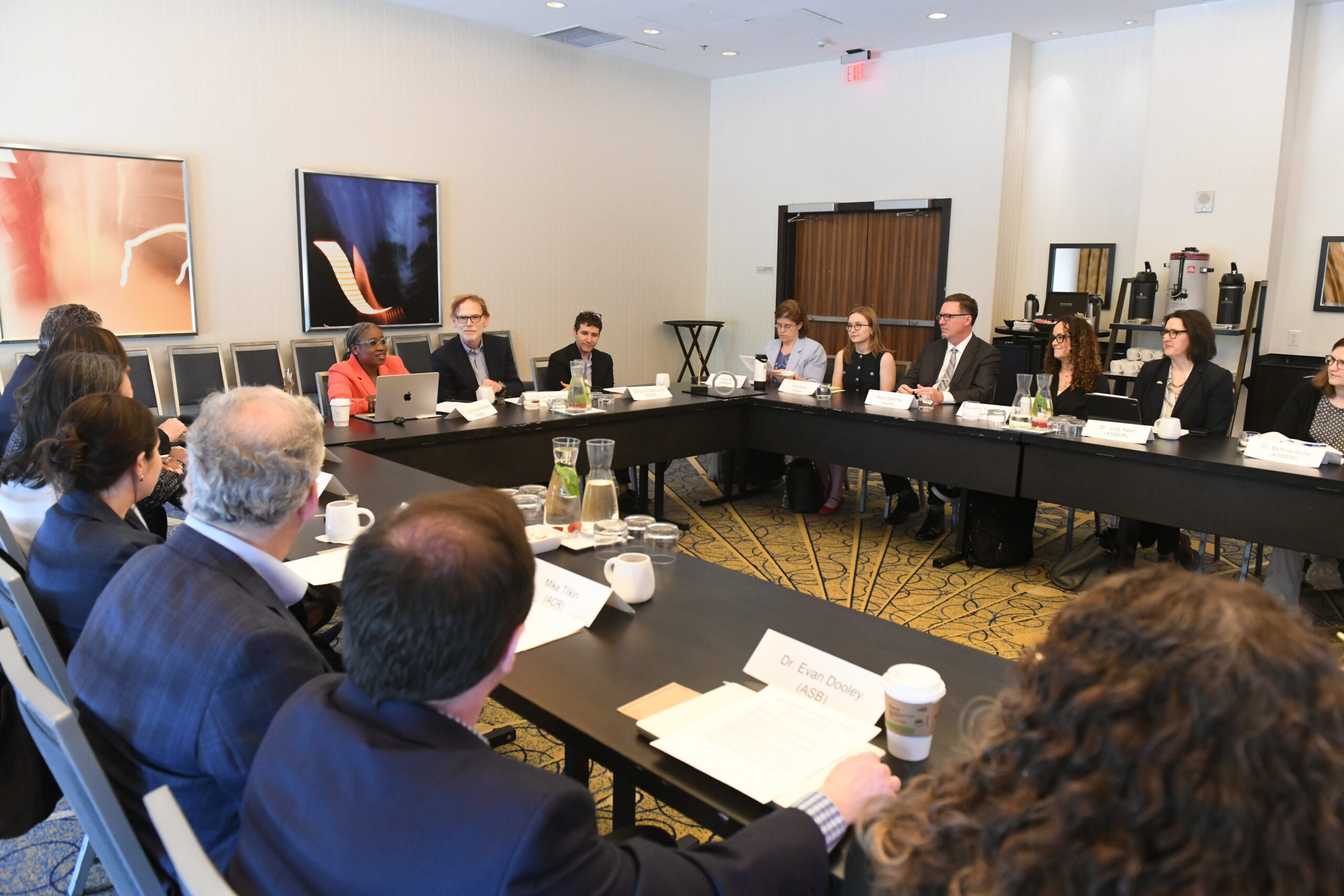
FoNIBIB routinely convenes meetings between representatives from its member organizations and NIBIB leadership to discuss the latest advances in biomedical imaging and bioengineering research, upcoming research priority areas, and future initiatives.

August 2026 FoNIBIB/NIBIB Leadership Meeting

On August 21, 2026, representatives from FoNIBIB member societies met with National Institute of Biomedical Imaging and Bioengineering (NIBIB) staff and leadership. The discussion examined how evolving NIH funding and peer-review policies affect NIBIB and its research community, with NIBIB encouraging investigators to consult Program Directors and respond to federal requests for information.

Participants also discussed NIBIB’s leadership in artificial intelligence initiatives, including PRIMED-AI and Bridge2AI, and its growing portfolio in new approach methodologies (NAMs). The meeting identified opportunities for FoNIBIB to strengthen communication between NIBIB and the bioengineering community, support interdisciplinary workforce development, and demonstrate the patient and community impact of NIBIB-funded research.

April 2026 FoNIBIB/NIBIB Leadership Meeting

On April 11, 2026, representatives from FoNIBIB member societies met with Drs. Bruce Tromberg and Dave Rampulla. The in-person meeting provided a forum to discuss NIH funding and workforce challenges, including the implementation of NIH’s Unified Funding Strategy, major artificial intelligence (AI) initiatives, concerns regarding STEM trainee support, and the role of AI in grant review and proposal development. The meeting concluded with a conversation around NIBIB’s priorities to accelerate translation of biomedical imaging and bioengineering technologies, strengthen support for early-career investigators, and enhance collaboration with the research community through future engagement with congressional stakeholders and public outreach efforts.

2025 FoNIBIB/NIBIB Leadership Meeting

On July 18, 2025, our FoNIBIB coalition members met with NIBIB staff and leadership. This meeting provided a forum to discuss NIBIB funding opportunities, training grants, and strategic initiatives along with an overview of FoNIBIB objectives, planned activities, and avenues for future collaboration.

These discussions underscored NIBIB’s unique position in leading partnerships with other NIH Institutes and Centers (ICs) given their role in improving population health, ensuring reliability and reproducibility of research, and fostering technological advances. FoNIBIB affirmed its dedication to advocating for NIBIB as a standalone IC in light of proposed NIH reorganization plans.

NIBIB emphasized the need for sustained information sharing between their staff and the bioengineering community, especially with the rapidly evolving policy landscape. The meeting concluded with an important conversation around NIBIB’s continued efforts to build a STEM workforce to reflect the communities it serves.

2024 NIBIB Leadership Meeting

On August 7, 2024, AIMBE President Lola Eniola-Adefeso, along with other AIMBE Board members and Fellows, met with NIBIB leadership. The meeting provided a platform to discuss current challenges, opportunities, and avenues for future collaboration between the two organizations. Key topics included funding initiatives, training grants, diversity and inclusion efforts, appropriations, and the proposed NIH reorganization framework.

The discussions underscored a mutual commitment to advancing biomedical engineering and ensuring that research in this field continues to drive innovation in healthcare. NIBIB leadership emphasized the Institute’s critical partnerships with other NIH Institutes and Centers, which enhance technology development across a broad spectrum of medical research.

The meeting also explored potential collaborative initiatives, with AIMBE offering to mobilize its Fellows – who are leading researchers across academia, industry, and government – to support NIBIB’s objectives. AIMBE reaffirmed its dedication to advocating for NIBIB’s independence and ensuring robust funding in light of the proposed changes.

The meeting concluded with a shared agreement on the importance of continued communication and collaboration to ensure that biomedical engineering remains at the forefront of healthcare innovation.

Read more